February 11, 2026
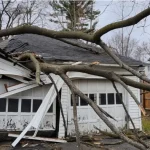
In the Capital Region of New York, the landscape is defined by its lush, towering canopies. From the historic streets of Center Square to the sprawling suburban yards of Colonie and Bethlehem, trees are more than just aesthetic assets. They are critical infrastructure. However, as climate change accelerates, Albany is increasingly subjected to “weather whiplash.” This involves volatile cycles of heavy saturated soils, high velocity wind gusts, and the dreaded weight of North American ice storms.
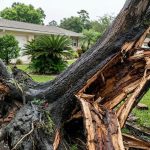
Not all trees are built for this turbulence. In Albany, a specific subset of species often favored for their fast growth or traditional beauty poses a significant risk to property and public safety during extreme weather. Understanding which species are vulnerable and why can mean the difference between a minor cleanup and a catastrophic insurance claim.
The Anatomy of Failure: Why Certain Species Snap
Before identifying specific culprits, it is important to understand the biological and environmental factors that contribute to storm failure. In Albany, three primary forces dictate risk:
- Wood Density and Elasticity: Fast growing trees often produce soft wood with low density. While they reach maturity quickly, their cellular structure lacks the tensile strength to resist snapping under heavy snow or ice.
- Branch Architecture: Trees with narrow, V-shaped crotches (codominant stems) are prone to included bark. This occurs when bark grows inside the joint, preventing the wood from fusing solidly. Under the stress of wind, these joints act like a wedge, splitting the tree down the middle.
- Rooting Depth vs. Soil Conditions: Albany’s geography includes areas of heavy clay and high water tables. Species with shallow, lateral root systems are easily “wind-thrown.” This is the term for an entire tree uprooting when the ground is saturated by rain followed by high winds.
The High-Alert List: Albany’s Most Vulnerable Species
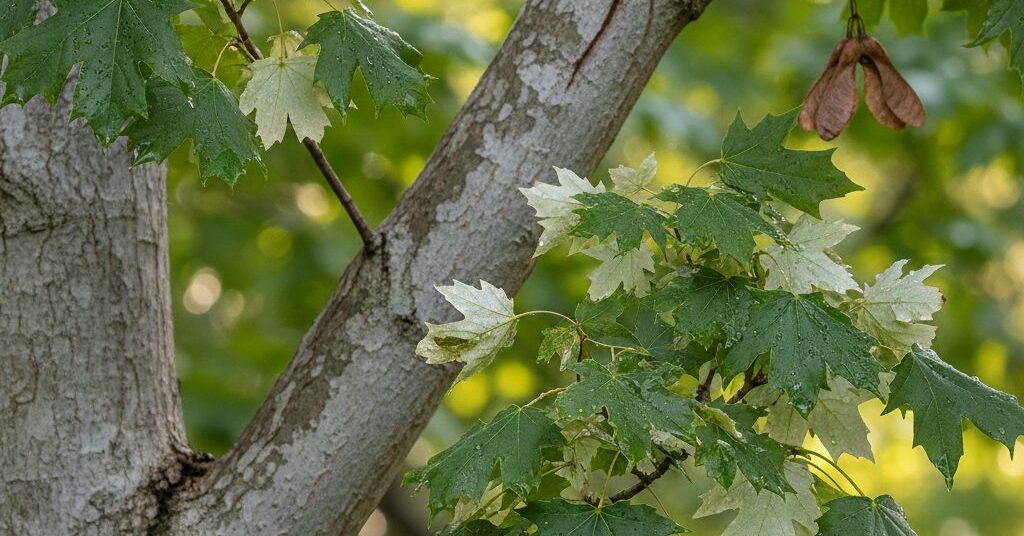
1. Silver Maple (Acer saccharinum)
The Silver Maple is perhaps the most notorious storm-prone tree in the Northeast. Historically popular for its rapid growth and silver undersided leaves, it is a frequent casualty in Albany’s summer thunderstorms.
- The Risk: Silver Maples have notoriously brittle wood and a tendency to grow multiple trunks with weak attachments. They are also highly susceptible to heart rot. This is a fungal decay that hollows out the trunk while the exterior appears healthy.
- Storm Behavior: Large limbs tend to “shed” during wind events. In an ice storm, the broad, sprawling canopy of a Silver Maple collects immense weight, leading to massive crown failure.
2. Bradford/Callery Pear (Pyrus calleryana)
Often cited by arborists as the most poorly designed tree in suburbia, the Bradford Pear is an invasive beauty that has become a liability.
- The Risk: This species is defined by its tight, upright branching structure. As the tree matures, the weight of the branches becomes too much for the central trunk to support.
- Storm Behavior: They are famous for exploding in even moderate wind or ice. Because all the branches originate from nearly the same point on the trunk, one failure often leads to the entire tree splitting into several pieces.
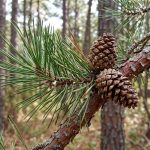
3. Eastern White Pine (Pinus strobus)
The White Pine is a majestic staple of the New York skyline, but its height and evergreen nature make it a target.
- The Risk: Because they keep their needles year round, they act like a massive sail in winter wind storms. When snow is heavy and wet, the surface area of the needles catches a tremendous amount of weight.
- Storm Behavior: Unlike the “snapping” of the Pear, White Pines are more likely to experience “limb drop” or total uprooting. In the sandy loam soils found in parts of the Pine Bush region, their roots may not hold firm during a microburst.
4. Willow Species (Salix spp.)
Commonly found near the Hudson River or the many creeks throughout Albany County, Willows are built for water, not wind.
- The Risk: Willows grow incredibly fast, which results in very soft, weak wood. They are also prone to internal moisture pockets that freeze and expand in the winter.
- Storm Behavior: Willows tend to lose secondary branches constantly. During a major storm, they can rain debris onto power lines and roofs, causing widespread utility outages.
5. Black Locust (Robinia pseudoacacia)
While the wood of a Black Locust is actually quite hard, its growth habit in urban Albany makes it a “stealth” risk.
- The Risk: Black Locusts are prone to the “Locust Borer” insect and various fungi. These pests weaken the internal structure of the tree without killing it.
- Storm Behavior: A Locust might look sturdy, but internal rot causes it to fail at the base. This “snapping at the stump” is particularly dangerous because there is often very little warning before the tree falls.
Local Risk Factors: The Albany Environment
The risk of these species is magnified by Albany’s specific local conditions.
| Factor | Impact on Tree Stability |
|---|---|
| Glacial Lake Albany Soils | Much of the city sits on ancient lake bed silt and clay. This soil holds water, making trees more likely to uproot during “liquid” winters. |
| The “Wind Tunnel” Effect | The Hudson Valley acts as a corridor for winds moving south from Canada. This increases the wind load on tall, isolated trees in residential yards. |
| Aging Infrastructure | In older neighborhoods like the Mansion District, root systems are often restricted by sidewalks and pavement. This leads to “girdling roots” that choke the tree and weaken its anchor. |
Mitigation Strategies for Homeowners
If you have one of these species on your property, you do not necessarily need to cut it down tomorrow. Proactive management can significantly reduce the risk of storm damage.
- Crown Thinning: For species like Silver Maples, a certified arborist can thin the canopy. This allows wind to pass through the tree rather than pushing against it like a solid wall.
- Structural Cabling: For trees with high value but poor architecture (like a large Oak with a split trunk), steel cables or braces can be installed to support weak joints.
- Soil Decompaction: Healthy roots are the best defense. Using “Air-Spade” technology to loosen compacted soil around the base of a tree allows for deeper, stronger root growth.
- The “20-Foot Rule”: Avoid planting any high risk, large stature species within 20 feet of a power line or your home’s foundation.
When to Call a Professional
It can be difficult for a homeowner to tell the difference between a healthy tree and one that’s becoming a serious hazard. After any major storm in Albany, keep an eye out for these warning signs:
- Fresh cracks in the soil around the base of the tree
- A noticeable new lean in the trunk
- Fungal “conks” or mushrooms growing from the trunk or root flare
- Large sections of dead wood in the upper canopy
- Exposed or heaving roots near sidewalks or driveways
These are indicators that structural stability may be compromised. In situations like this, Tree and Stump Removal Service in Albany, NY can assess whether the tree can be stabilized or if safe removal is the best option to prevent property damage.
Also, keep in mind that in the City of Albany, trees located between the sidewalk and the street are often city-owned. If you suspect a city tree poses a hazard, contact the Department of General Services (DGS) for an official inspection before attempting any work yourself.
Conclusion
Albany’s urban forest is one of its greatest treasures, providing shade, cooling, and character. However, the “right tree in the right place” philosophy is essential for safety. By identifying high risk species like Silver Maples and Bradford Pears early, homeowners can take the necessary steps to protect their property. Whether through professional pruning or choosing more resilient native species like the Sugar Maple or White Oak for new plantings, we can ensure that Albany’s skyline remains beautiful without being a burden.