December 18, 2025
Removing a tree near power lines in the NY Capital Region is one of the most high‑risk and technically demanding situations a homeowner can face. Even a small branch brushing a live wire can energize the entire tree and create immediate danger. Homeowners in Albany, Latham, Colonie, Niskayuna, Schenectady, and Troy often encounter this problem after storms, rapid tree growth, or when a leaning tree begins drifting toward overhead lines. Because energized lines can cause severe injury, fire, or widespread outages, this work must always be handled by qualified professionals who coordinate directly with the local utility company.
This guide explains how safe removal works, how utilities determine what they handle, why local expertise matters, and what Capital Region homeowners should expect before, during, and after the process.
Understanding the Real Risks Near Power Lines
Tree work near electrical lines is among the most dangerous types of tree care. Electrical hazards can occur even without direct contact because energy can arc through the air, especially in wet or windy weather common in the Capital Region.
Major risks include:
- Electrocution if branches or equipment contact live wires.
- Electrical arcs that energize the entire tree.
- Power outages are affecting homes and neighborhoods.
- Fire hazards caused by sparking limbs.
- Injuries from falling branches or failed rigging.
Because of these risks, only trained and properly equipped crews should perform this work.
Quick Safety Decision Guide for Homeowners
Use this checklist to decide who to notify first.
- If the tree is touching a live, street power line: Alert the utility company immediately.
- If you see sparks, arcing, or hear buzzing: Notify the utility emergency line.
- If the tree is near but not touching the line: Contact a professional tree removal service who is line clearance certified or EHAP qualified.
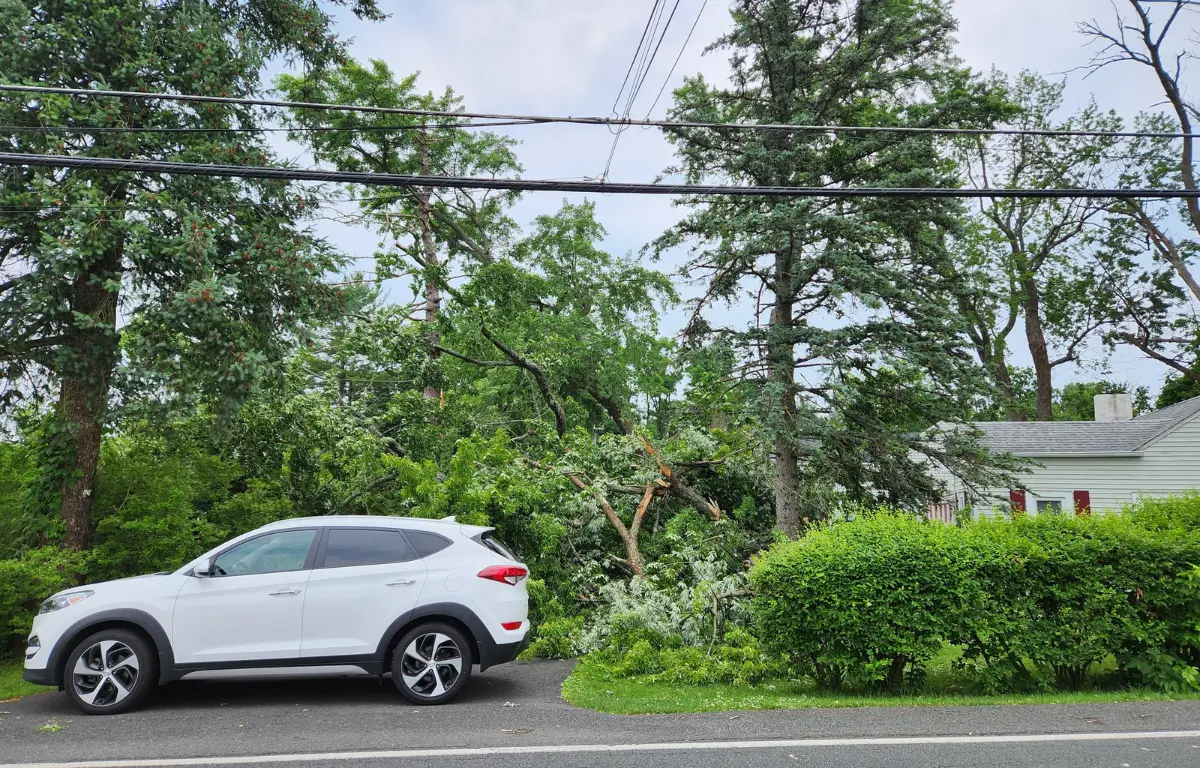
- If the tree is leaning toward lines after a storm: Request an inspection and documentation from a certified arborist tree service.
- If a limb falls on service lines attached to your home: You don’t need to notify the utility provider, find a line clearance certified or EHAP qualified tree professional for removal.
Never approach a tree that may be energized or has debris touching wires.
Why You Should Never Attempt DIY Trimming or Removal
DIY tree work is risky on its own, and adding power lines increases the danger significantly. Wooden or metal ladders, wet branches, and metal tools can complete an electrical path. Without insulated equipment, certified training, and utility coordination, a homeowner can face severe injury.
A single poorly executed cut can swing a branch into a live wire, and even a slight ladder shift can bring you within arc distance. These hazards make DIY trimming near power lines unsafe in every situation.
How Professional Crews Handle Tree Removal Near Power Lines
Tree and Stump Removal Service in Albany, NY follows a structured and safety‑focused removal process.
-
Initial Inspection
A certified arborist evaluates the tree’s health, root stability, lean direction, dead wood, canopy spread, and proximity to primary and secondary power lines. They also review access points and safe drop zones.
-
Utility Coordination
Tree services work directly with National Grid, NYSEG or the appropriate utility provider. The utility may de-energize lines, schedule temporary shutoffs, or install insulating guards. Homeowners cannot request these protections without a qualified contractor.
-
Controlled Rigging and Cutting
Crews use insulated aerial lifts, non‑conductive ropes, and precise rigging systems to lower limbs in controlled stages. Each cut is planned carefully to prevent swinging limbs or sudden force shifts.
-
Specialized Equipment
Safe removal requires insulated boom trucks, shock‑resistant saws, insulated pole tools, and protective gear designed specifically for electrical hazard work.
-
Debris Clearing and Stump Work
After the tree is removed, crews clear branches, wood sections, and debris. They may also grind the stump if the location is safe and free of underground utility conflicts.
How Utility Companies Decide What They Handle
Utility companies maintain vegetation that affects major distribution lines. They do not remove private trees unless the tree is actively threatening critical electrical infrastructure.
Utility companies typically address:
- Branches contacting primary distribution lines.
- Trees that could cause outages for multiple homes.
- Emergency clearance on main lines after severe weather.
They do not address:
- Trimming private trees not touching main lines.
- Removing full trees from residential yards.
- Clearing branches around service drops to individual homes.
Tree removal on private property nearly always requires a professional service.
Common Delays Homeowners Experience
Tree removal near power lines often involves coordination with multiple parties, which can create delays.
- Utility shutoff scheduling windows.
- Limited availability of insulated lift trucks.
- Weather restrictions for electrical safety.
- Tight access in older Albany neighborhoods.
- Storm‑related backlogs across the region.
Understanding these challenges sets realistic expectations for timing.
Underground Utility Hazards Many Homeowners Overlook
Tree removal near power lines also involves underground risks. In older Capital Region neighborhoods, buried utilities may be shallow or poorly marked.
Common underground hazards include:
- Natural gas lines.
- Buried electrical service lines.
- Communication and fiber‑optic cables.
- Water and sewer lines.
Before stump grinding or root removal, crews contact Dig Safely NY (811) to mark all underground utilities.
Local Examples From Around the Capital Region
Real scenarios help show how common these situations are.
- A pine in Colonie is leaning into secondary lines after an ice storm.
- A silver maple in Guilderland is rapidly growing upward and brushing conductors.
- An oak in Loudonville stretching over service drops to a home.
- A cottonwood in Niskayuna is pushing into a main feeder line after heavy rain.
- A Norway maple in Troy is dropping limbs onto insulated secondary wires.
Local crews understand how each species behaves in regional weather conditions.
What Homeowners Should Do Before Removal
Proper preparation helps crews work efficiently and safely.
- Move vehicles from driveways.
- Keep pets and children indoors.
- Remove grills, furniture, and decorations from the work area.
- Clear access routes for trucks and lifts.
- Notify neighbors if equipment may cross shared boundaries.
What Homeowners Should Never Do Near Power Lines
Avoiding unsafe actions protects your safety and your property.
- Do not trim branches near energized lines.
- Do not use ladders near wires.
- Do not touch trees in contact with lines.
- Do not remove storm debris without professional clearance.
- Do not hire anyone lacking electrical hazard training.
Always rely on a certified crew for this type of work.
Costs for Tree Removal Near Power Lines
Tree removal near power lines requires specialized equipment and coordination, which increases overall costs. Prices vary based on height, hazard level, equipment needs, and utility involvement.
Primary cost factors include:
- Labor and equipment.
- Utility shutoff scheduling.
- Extra rigging requirements for tight spaces.
- Cleanup and optional stump grinding.
Removals requiring cranes or insulated aerial lifts or evening emergencies can cost dramatically more than standard tree removals.
Responsibilities Homeowners Have After Removal
After removal, homeowners may still have several responsibilities.
- Decide whether to keep or remove any wood left by the crew.
- Determine whether replanting is appropriate.
- Monitor the stump area for regrowth.
- Maintain pruning schedules for nearby trees.
- Keep an eye on trees that may begin growing toward power lines.
These steps help prevent similar issues in the future.
Frequently Asked Questions About Tree Removal Near Power Lines
Will insurance cover removal near power lines?
Insurance will cover removal if the tree caused structural damage or blocked access. If the tree poses a safety hazard but has not caused damage, coverage depends on the specific policy. A professional estimate with photos gives your insurer the information needed to decide. Proper documentation can also speed up the approval process.
What if the tree belongs to my neighbor but is hitting my lines?
If a neighbor’s tree makes contact with your service lines, the utility may secure the electrical hazard. You may still be responsible for removing the tree from your property. Clear photos and written notes help avoid disputes. Communicating with your neighbor can also simplify the next steps.
Who pays for tree removal near power lines?
Homeowners typically cover the cost unless the tree threatens a major distribution line. Utilities focus on maintaining system‑wide safety and reliability. If only your property is affected, a private tree service will need to handle the removal. Written estimates help clarify responsibilities.
Final Steps for Homeowners in the Capital Region
If you notice a tree leaning toward power lines, touching wires, or showing signs of storm damage, act quickly to protect your home and your safety. Tree and Stump Removal Service provides insured, professional, and fast-response tree removal throughout Albany, Colonie, Latham, Niskayuna, Troy, Schenectady, and surrounding areas. Call (518) 319-9714 to schedule expert assistance. A qualified crew will coordinate with the utility provider, secure hazards, and remove the tree safely.