November 21, 2025
After cutting down a tree, many homeowners assume the work is done. But what’s left behind the stump can quietly become one of the most problematic elements in your yard. A stump might look harmless at first, blending in with the landscape, but beneath the surface, it’s still alive with decaying roots, moisture, and organisms that slowly create a chain reaction of issues.
In this comprehensive guide from Tree & Stump Removal Service, we’ll dive deep into what happens when a stump is left behind, why it can lead to costly and dangerous problems, and how professional removal can save you years of frustration.
Why Homeowners Leave Tree Stumps (and Why It’s a Mistake)
It’s easy to understand why some homeowners leave stumps behind. The tree is gone, the yard looks clear, and removal costs might seem unnecessary. Others keep stumps as decorative garden elements, seats, or planters. But while that might seem creative, it’s short-lived. Stumps decay from the inside out, weakening the surrounding soil and attracting a variety of pests.
Common Reasons Stumps Are Left Behind:
- The stump looks stable and harmless
- It’s used for decoration or garden features
- Homeowners expect natural decomposition
- Cost-saving measures during tree removal
The problem? Natural decay takes years, and during that time, it quietly creates more damage than most homeowners realize.
The Pest Problem: Termites, Ants, and More
Rotting stumps become prime real estate for pests. Termites, carpenter ants, and beetles thrive in the damp, decomposing wood. Over time, these pests spread to fences, sheds, and even your home’s foundation.
Common Infestations and Their Risks:
- Termites: Colonize rotting stumps before moving to your home’s structure.
- Carpenter ants: Tunnel through moist wood, weakening it further.
- Beetles and grubs: Damage lawns and nearby garden beds.
Expert Insight: Once these pests establish themselves in a stump, it becomes nearly impossible to control them without full removal. Regular pest treatments won’t reach deep root networks where colonies thrive.
Fungal and Root Decay Beneath the Surface
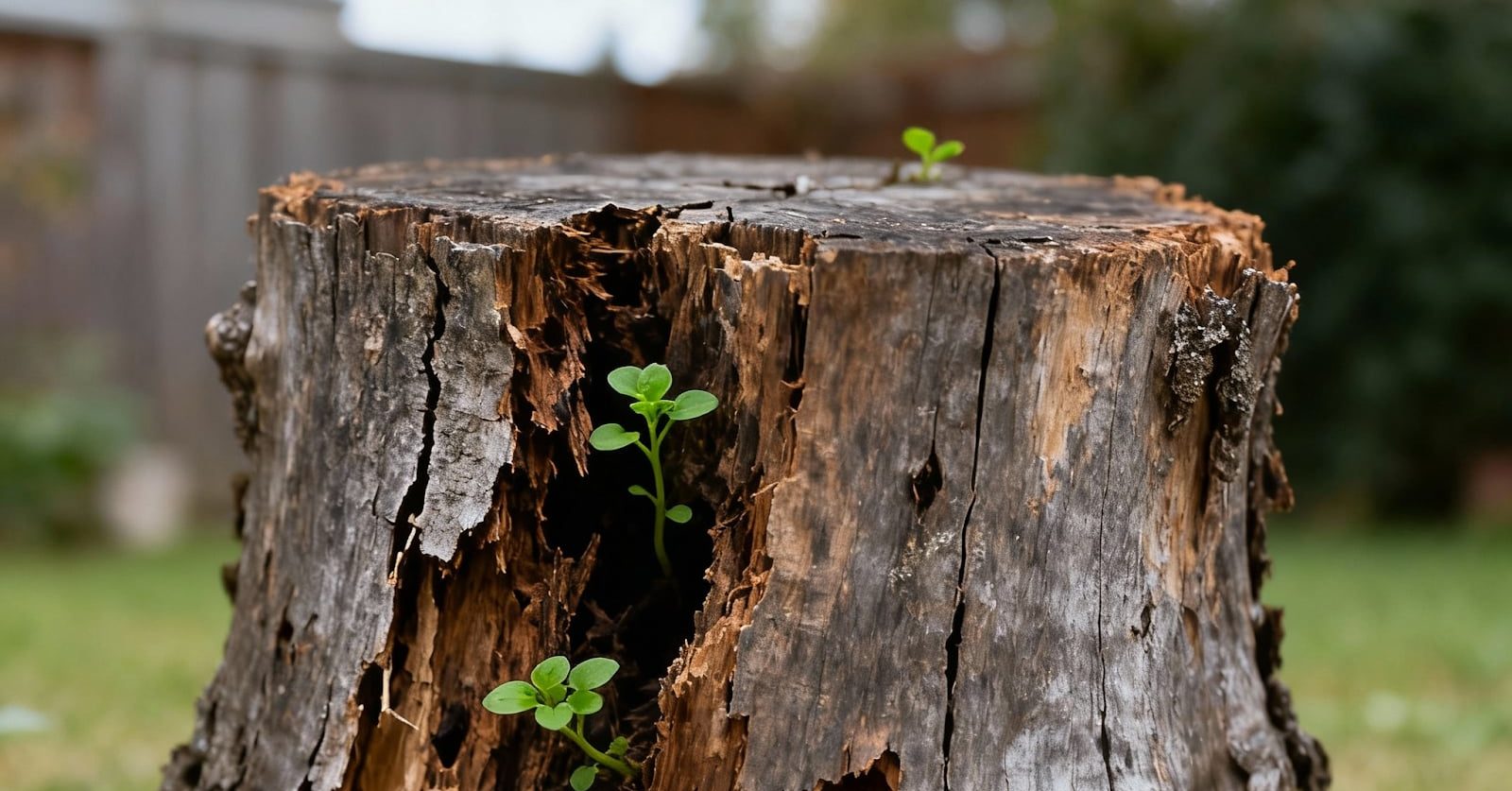
A leftover stump doesn’t stop decaying; it spreads that decay through its root system. Even years after a tree is cut down, its roots can host fungi like Armillaria (honey fungus) that travel underground, infecting nearby plants and healthy trees.
Warning Signs of Fungal Spread:
- Mushrooms or conks near the base
- White threads (mycelium) in the soil
- Musty, sour odor from damp wood
- Patchy, dying grass or shrubs nearby
Over time, the soil around the stump becomes nutrient-poor and disease-prone, making it difficult for new plants to establish healthy growth.
Expert Tip: Fungal infections like Armillaria can spread invisibly through root networks. Professional removal and soil refresh are the only ways to stop them completely.
Regrowth: The Stump That Refuses to Die
Some stumps refuse to stay dead. Species like poplar, maple, or willow send up vigorous shoots from buried roots, trying to regrow. These shoots are not only unsightly, but they also sap nutrients and water from the surrounding soil.
Regrowth Problems Include:
- Multiple shoots that form a tangled brush
- Competition with lawns and garden plants
- Weak, fast-growing shoots prone to breakage
Even if you cut the sprouts back, they’ll continue returning until the stump and roots are removed completely. Herbicides may help temporarily, but professional grinding eliminates the problem permanently.
Safety and Structural Risks
Leftover stumps pose hidden dangers, especially in busy yards. Grass and weeds grow over them, disguising them until someone trips or equipment hits them.
Hazards Include:
- Tripping accidents during yard work or play
- Damage to mower blades and landscaping tools
- Roots pushing up pavement or garden edging
These risks increase as the stump softens over time, turning from solid wood into a fragile, hollow trap underfoot.
Environmental and Aesthetic Damage
Beyond safety, leaving a stump disrupts your landscape’s balance. As the wood decomposes, it alters the pH and nutrient levels of nearby soil, creating uneven patches where grass won’t grow. The decaying roots can also create air pockets underground, causing dips or soft spots in your yard.
From an aesthetic standpoint, visible stumps make an otherwise clean property look neglected. They also limit how you can use your space, making it harder to plant new trees, install patios, or build structures.
How Stumps Impact Drainage and Soil Health
Few homeowners realize that decaying stumps can interfere with water movement in the soil. As roots rot, they create channels that retain water, leading to overly wet or unstable areas.
Signs of Poor Drainage:
- Standing water after rain
- Mushy or soft patches near the stump
- Insect larvae or fungus gnats are breeding in the damp area
This trapped moisture encourages mold growth and attracts mosquitoes, creating additional outdoor nuisances.
Should You Remove That Tree Stump?
At some point, every homeowner asks the same question: do I really need to remove this stump, or can it stay where it is? The honest answer depends on what you want your yard to look like, how you use your outdoor space, and whether you want to avoid future problems instead of reacting to them later.
Keeping a stump might seem harmless at first, but most people eventually reach a moment where the stump becomes a limitation. It gets in the way of mowing, landscaping, adding a new garden bed, installing a patio, or planting a healthier tree in its place. The longer you leave it, the more likely it is that pests, fungi, or regrowth will turn it from a small inconvenience into a costly project.
Here is a simple way to decide:
Remove the stump if you want to:
- Keep pests away from your home
- Avoid fungal spread to other plants
- Improve drainage and soil health
- Prevent tripping hazards and lawn damage
- Prepare the area for planting or construction
- Maintain a clean, modern look in your yard
Keep the stump only if:
- You are comfortable managing pests
- You do not plan to landscape the area
- You accept slow soil decay and uneven ground over time
Most homeowners choose to remove it once they understand what happens beneath the surface. A stump is more than a leftover chunk of wood. It is an active part of your soil environment, and it influences everything around it. Removing it now gives you freedom, safety, and a healthier yard in the long run.
What to Expect After Stump Removal: How to Reuse and Restore Your Yard
Once the stump is gone, the area can be repurposed almost immediately. Homeowners often:
- Reseed with grass for a smooth lawn
- Plant a new tree species suited to the soil
- Add a garden bed, patio, or outdoor feature
The removal process restores both aesthetics and safety, increasing property value and improving drainage.
Frequently Asked Questions
How long does it take for a stump to rot naturally?
Depending on the tree species, environment, and moisture levels, a stump can take 15 years or more to decay on its own. During that time, it often attracts pests like termites, ants, or fungi, making natural decomposition an impractical option.
Can I burn or chemically treat a stump to remove it?
It’s not recommended. Burning or chemical treatments can harm the soil, nearby plants, and pose fire or safety risks. Professional stump grinding is faster, safer, and removes the stump completely without damaging the surrounding landscape.
Does stump grinding remove all the roots?
Stump grinding removes the main stump and large roots up to 12 inches below ground level, which is deep enough to prevent regrowth and pest issues. Smaller root fragments naturally decompose over time without affecting your lawn.
Can I plant in the same spot after the stump is removed?
Yes. Once the stump and root system are cleared, and a nitrogen fertilizer is applied, the area can be replanted with grass, shrubs, or a new tree after the soil settles. Adding fresh topsoil or compost helps restore nutrients lost during removal.
When is the best time of year for stump removal?
The best time is late fall through early spring when the ground is soft and trees are dormant. Cooler conditions make the process more efficient, and scheduling before summer ensures a smooth replanting season.
Restore Your Yard with Confidence
Leaving a stump may seem minor, but its long-term consequences can be significant, from pest invasions and soil decay to structural hazards. The sooner you remove it, the sooner you can reclaim a safe, healthy, and beautiful yard.
Tree & Stump Removal Service provides reliable, efficient, and eco-conscious stump removal services for residential and commercial properties in Albany NY. We restore your property to its full potential safely and affordably.