March 18, 2026
Concerned about the health of your trees in Albany County? Spotting structural damage early is vital for safety, protecting your property, and preserving your landscape. Ignoring these signs can lead to dangerous tree failures, especially with our region’s unique climate challenges. This guide will help you understand how to identify potential hazards and when to seek expert help.
Key Takeaways
- Look for clear indicators like deep cracks, significant leaning, visible decay, or extensive dead branches to spot structural damage.
- Albany County’s heavy snow, ice storms, high winds, and pests like the Emerald Ash Borer significantly increase the risk of tree damage.
- Early detection and professional assessment are crucial to prevent property damage and ensure safety.
- Regular inspections, proper pruning, and understanding local regulations are key preventative measures for tree health.
- While DIY checks are a start, a Certified Arborist offers the most accurate assessment and appropriate solutions for complex issues.
- The Tree & Stump Removal Service provides expert evaluations and safe remediation for structurally damaged trees in the local area.
What is Tree Structural Damage?
Tree structural damage refers to any defect in a tree’s physical integrity that compromises its ability to stand safely or withstand environmental stressors. This damage can manifest in various parts of the tree, from its roots to its canopy, often leading to instability and an increased risk of failure. Understanding this is your first step in protecting your property and family.
Common Signs of Structural Damage in Albany County Trees
Identifying the common signs of structural damage is crucial for early intervention, especially for trees facing Albany County’s specific environmental pressures. What should you be looking for?
Cracks and Splits: What to Look For
Cracks and splits in a tree’s trunk or major branches are critical indicators of structural weakness. According to the Cornell University Homeowner’s Guide for Healthy Trees, large, deep vertical cracks on opposite sides of the trunk are a primary indicator of rot in the roots or base.
- Vertical Cracks: Often run along the trunk, indicating internal stress or decay.
- Horizontal Cracks: More urgent, suggesting imminent branch or trunk failure.
- V-Shaped Crotches: Weak points where branches meet, highly susceptible to splitting.
- Old Wounds: Scars from past damage can become entry points for decay, leading to cracks.
Leaning Trees and Root Issues
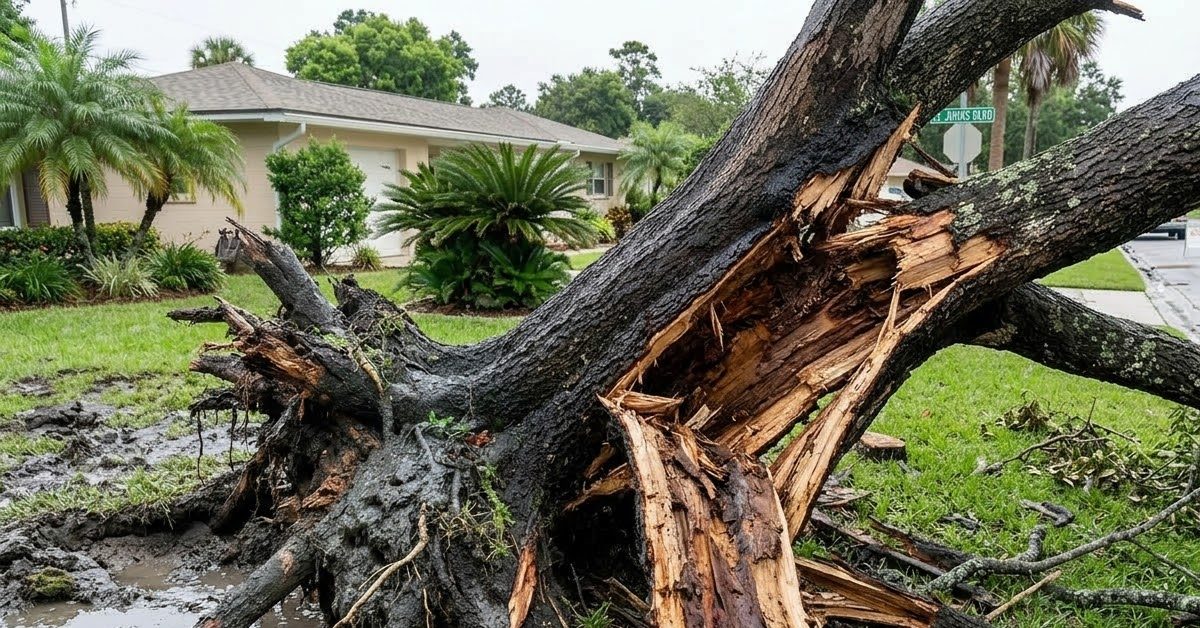
A tree that suddenly starts to lean or tilt is a major red flag, pointing to potential root system instability. This can result from saturated soil after heavy rains, root damage from construction, or underlying decay. Raised soil or a ‘heaving’ ground around the tree’s base often accompanies root problems, signaling that the tree might be losing its anchor.
- Sudden Lean: A pronounced change in angle, especially after a storm, suggests immediate danger.
- Raised Soil: Dirt mounding or cracking around the base indicates root system movement.
- Exposed Roots: Visible, severed, or girdling roots can compromise stability.
- Sparse Canopy: Often an early sign of root damage, as the tree struggles to uptake nutrients.
Decay, Fungi, and Cavities
The presence of decay-causing fungi, like mushrooms or conks, on the trunk or at the base of a tree is a definitive sign of internal rot. These fungi feed on decaying wood, hollowing out the tree from the inside. Cavities, whether open or hidden, mean less solid wood to support the tree’s weight, making it highly vulnerable to breakage. Carpenter ants are also often attracted to decaying wood.
- Fungal Growths: Mushrooms, conks, or shelf fungi on the trunk or roots indicate active decay.
- Open Cavities: Visible holes or hollows in the trunk or branches reduce structural integrity.
- Soft or Spongy Wood: Test suspicious areas with a small hammer or probe; soft wood suggests decay.
- Insect Activity: Sawdust trails or carpenter ant presence can point to internal rot.
Deadwood and Canopy Changes
Dead or dying branches, especially larger ones, are not just aesthetic issues; they can signify deeper structural problems or disease. For example, according to the New York State Department of Environmental Conservation (DEC), ash trees in Albany County with a thinning canopy and splitting bark are often victims of the Emerald Ash Borer, which causes rapid structural decline and makes the wood extremely brittle.
- Excessive Deadwood: Large dead branches that haven’t fallen indicate a risk of future breakage.
- Thinning Canopy: Fewer leaves than normal, or smaller, discolored leaves, point to stress.
- Missing Bark: Patches of missing bark can expose the tree to disease and pests, weakening it.
- Branch Dieback: Tips of branches dying back, often a symptom of root issues or vascular disease.
Local Factors Exacerbating Tree Damage in Albany County
Trees in Albany County face a specific set of environmental and biological threats that can severely compromise their structural integrity. Understanding these local factors helps you protect your trees better.
Harsh Weather Events (Ice, Snow, Wind)
Our region experiences significant weather events that put immense stress on trees. The International Society of Arboriculture (ISA) emphasizes that even trees seemingly undamaged by heavy snow or ice should be professionally assessed for internal cracks or root movement.
- Ice Accumulation: Freezing rain coats branches, adding significant weight, leading to breakage.
- Heavy Wet Snow: Can overload branches, especially evergreens, causing them to bend or snap.
- High Winds: Gusts over 50 mph can uproot trees or break weak limbs, common during severe thunderstorms.
- Saturated Soil: Heavy rains can weaken root anchorage, making trees more susceptible to windthrow.
Invasive Pests and Diseases (EAB, ALB, HWA, DED, Oak Wilt)
Albany County is unfortunately home to several destructive pests and diseases that directly impact tree structure. The Emerald Ash Borer (EAB) has decimated ash tree populations, making them brittle and prone to failure. The Asian Longhorned Beetle tunnels through hardwoods, weakening them internally. Diseases like Dutch Elm Disease and Oak Wilt can cause rapid decline, leading to structural instability. Anthracnose, thriving in our cool, wet springs, can cause branch dieback.
- Emerald Ash Borer (EAB): Larvae tunnel under bark, disrupting nutrient flow and making ash trees extremely brittle.
- Asian Longhorned Beetle: Creates tunnels in living wood, weakening structural components of maples, birches, and willows.
- Dutch Elm Disease (DED): A fungal disease that clogs the tree’s vascular system, leading to wilting, death, and structural weakness.
- Oak Wilt: A fast-spreading fungus that can kill oak trees in weeks, compromising their integrity.
- Hemlock Woolly Adelgid: Feeds on hemlock sap, causing needle loss and eventual death, making trees fragile.
Urban Environment Stressors (Heat Island, Construction)
Urban environments, common throughout Albany County, introduce unique stressors. The ‘Urban Heat Island Effect’ in densely built areas stresses trees, making them more vulnerable to disease and decline. Construction activities, soil compaction, and changes in grade can severely damage root systems, often with delayed visible symptoms. These hidden stresses can weaken a tree’s foundation over time.
- Soil Compaction: Reduces oxygen and water availability to roots, hindering growth and stability.
- Construction Damage: Trenching, excavation, and heavy equipment can sever or crush roots, leading to long-term decline.
- Urban Heat Island Effect: Elevated temperatures in paved areas stress trees, reducing their resilience.
- Pollution: Air and soil pollutants can weaken trees, making them more susceptible to pests and diseases.
DIY Assessment vs. Professional Arborist Evaluation
When you suspect structural damage, knowing whether to tackle it yourself or call a professional is key. While some basic observations are good, an arborist offers an unmatched level of expertise and safety.
| Feature | DIY Assessment | Professional Arborist Evaluation |
|---|---|---|
| Tools Used | Basic visual checks and simple tools | Advanced diagnostic tools to detect internal decay |
| Inspection Depth | Surface-level issues only | Full analysis of roots, structure, and stability |
| Accuracy | Easy to miss hidden damage or decay | Data-backed diagnosis with high accuracy |
| Safety Risk | Risky if climbing or checking unstable trees | Handled safely with proper equipment and training |
| Outcome | Guess-based decision, possible mistakes | Clear action plan for treatment or removal |
| Long-Term Impact | Risk of missed hazards or delayed action | Prevents costly damage through early detection |
When to Call a Certified Arborist
While you can certainly perform initial checks, a Certified Arborist brings specialized knowledge and equipment to the assessment process. They can identify subtle issues, assess internal decay using tools like resistographs, and accurately determine risk levels. Their training covers tree biology, pathology, and structural mechanics, ensuring a comprehensive evaluation.
- Large or Mature Trees: Large trees pose significant risks; professional assessment is always recommended.
- Proximity to Structures: If a damaged tree is near your home, garage, or power lines.
- Internal Decay Suspected: When external signs are minimal, but you suspect internal issues.
- After Severe Weather: A professional check ensures hidden damage from storms isn’t overlooked.
- Ambiguous Symptoms: If you’re unsure about the severity or cause of the damage, get an expert opinion.
The Cost and Timeline of Tree Damage Assessment and Intervention
Understanding the financial aspects of addressing tree damage is important. The costs can vary widely depending on the extent of the damage, the tree’s size, and the complexity of the work required. Getting a clear quote upfront is always best.
Understanding Assessment Fees
Professional tree damage assessments usually involve an arborist visiting your property to evaluate the tree’s condition. These fees reflect the arborist’s expertise, time, and specialized equipment used for diagnostics. While an initial consultation might be free, a detailed risk assessment report often comes with a charge.
- Basic Consultation: Some companies offer a free initial visit to discuss concerns.
- Detailed Assessment: Expect to pay for a comprehensive evaluation, including a written report and recommendations.
- Advanced Diagnostics: Specialized tests (e.g., decay detection) can add to the cost.
- Emergency Assessment: May incur higher fees due to immediate response requirements.
Factors Affecting Remediation Costs
If structural damage requires intervention, the costs are influenced by multiple factors. Simple pruning of a few damaged branches will be less expensive than removing a large, compromised tree. Emergency services, often needed after storms, typically carry a premium due to their urgent nature and after-hours work. The average cost for tree removal in Albany County, but can increase significantly for large, hazardous trees.
- Tree Size: Taller and wider trees require more labor and specialized equipment, increasing costs.
- Accessibility: Trees in confined spaces or near structures are harder to access and remove safely.
- Severity of Damage: Extensive decay or instability makes the job more complex and risky.
- Location: Albany County’s specific regulations and disposal fees can influence pricing.
- Emergency Services: Urgent removals after storms are generally more expensive.
Preventative Measures for Healthy Albany County Trees
Proactive care is your best defense against structural damage. By implementing preventative measures, you can enhance your trees’ health and resilience against Albany County’s environmental challenges.
Proper Pruning and Maintenance
Proper pruning is more than just aesthetics; it’s vital for structural integrity. Removing dead, diseased, or crossing branches eliminates weak points and improves the tree’s overall architecture. Regular maintenance helps prevent issues from escalating and can extend your tree’s lifespan, making it more resistant to wind and ice.
- Regular Pruning: Annually or biannually to remove weak or dead wood.
- Structural Pruning: Focuses on developing a strong central leader and well-spaced branches.
- Crown Thinning: Improves air circulation and reduces wind resistance.
- Avoid Topping: This harmful practice creates weak, rapidly growing sprouts that are prone to breakage.
Regular Inspections
Scheduling regular inspections with an arborist is a smart investment. They can spot subtle signs of stress, disease, or pest infestations before they become major structural problems. Early detection means less costly and less invasive interventions, keeping your trees healthier and safer.
- Annual Check-ups: An arborist can identify risks not visible to the untrained eye.
- Post-Storm Inspections: Essential after heavy winds, snow, or ice to assess hidden damage.
- Pest and Disease Monitoring: Early detection of local threats like EAB can save your trees or allow for safe removal.
- Soil and Root Health: Arborists can assess the health of the often-overlooked root system.
Albany County Tree Regulations You Need to Know
Navigating local tree regulations is a critical part of tree care in Albany County. The City of Albany has specific ordinances regarding tree work, especially for trees on public property or those of significant size on private land. Ignoring these rules can lead to fines and legal complications. Always check with a certified arborist before undertaking any major tree work.
Why Choose Tree & Stump Removal Service for Structural Damage Concerns
When it comes to tree structural damage in Albany County, you need a service provider who understands the unique local challenges and can respond quickly and professionally. Tree & Stump Removal Service is a premier service provider in the local area, offering expert assessment and safe, efficient remediation.
- Local Expertise: We understand Albany County’s specific climate, pest issues, and regulations, offering tailored solutions.
- ** Arborists:** Our team includes professionals trained to identify complex structural damage and assess risks accurately.
- Safety First: We prioritize safety for your property and our crew, using state-of-the-art equipment and proven techniques.
- Comprehensive Services: From detailed assessments to safe removal and stump grinding, we handle every aspect of tree care.
- Reliable & Transparent: We provide clear communication, prompt service, and fair pricing, addressing common customer pain points.
- Emergency Response: We offer timely services for urgent situations, minimizing further damage and ensuring peace of mind.
Frequently Asked Questions
What exactly is tree structural damage?
Structural damage refers to defects in a tree’s trunk, branches, or root system that compromise its stability and increase the risk of failure. This can include cracks, decay, weak branch attachments, or root rot, often leading to potential hazards for property and people.
When should I call an arborist for structural damage?
You should call an arborist immediately if you notice large cracks, significant leaning, widespread decay, or if a tree has been severely impacted by a storm. These signs often indicate a high risk of failure requiring urgent professional assessment.
How do Albany County’s climate and pests affect tree structural integrity?
Albany County trees face unique challenges from heavy snow and ice storms, high winds, and specific pests like the Emerald Ash Borer. These factors can weaken tree structures, making regular inspections and proactive care even more critical in our local climate.
Do I need a permit to remove a tree with structural damage in Albany?
No, many cities, including Albany, NY, don’t require permits for removing trees on private property, though it’s always best to verify with the City of Albany Forestry Department.
What is the typical cost for a professional tree damage assessment?
The cost for a professional tree assessment can vary, typically ranging from $150 to $300, depending on the tree’s size and complexity. This fee covers an arborist’s expert evaluation, risk assessment, and recommendations for remediation.
Can regular pruning prevent structural damage?
Regular pruning removes dead or weak branches, improving structural integrity and reducing failure risk. Proper pruning also enhances tree health, promoting balanced growth and making the tree more resilient to local stressors and weather events.
Can I assess tree structural damage myself, or do I always need a professional?
While it’s possible to identify obvious signs like large cracks or a severe lean, a professional arborist possesses the training and tools to detect subtle issues, internal decay, and assess overall tree health and risk accurately. Their expertise is invaluable.
Conclusion
Identifying structural damage in your Albany County trees early protects your property and ensures safety. While some signs are clear, a professional assessment by Tree & Stump Removal Service offers peace of mind and expert solutions. Don’t wait for a small issue to become a major hazard. Contact us today for a thorough evaluation and safeguard your landscape.